
Network automation
More free capacity thanks to the automation of repetitive network work processes.
Network automation
The challenge
The traditional way of configuring networks is no longer up to date. While other sectors have long relied on automation, manual work is commonplace in IT. However, this is too expensive, too time-consuming and prone to errors. A new approach is therefore required: in future, a kind of factory will produce and operate networks on the assembly line fully automatically, as is already the case with cars, for example.
Automation
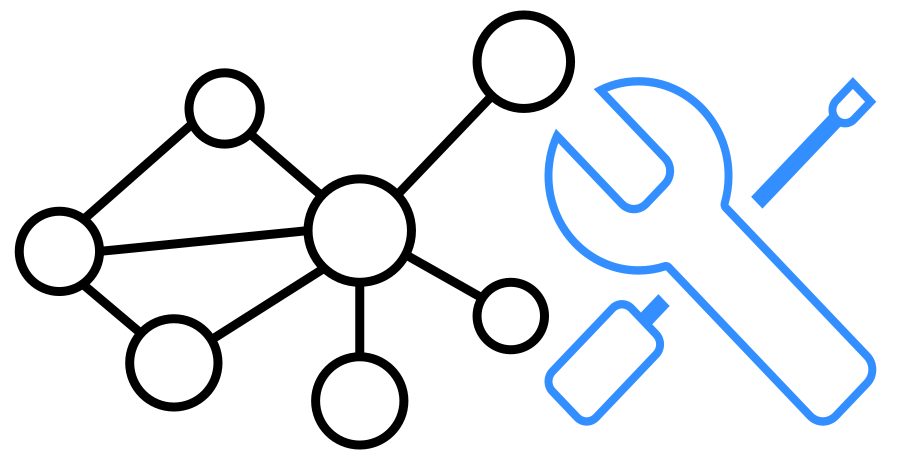
In principle, any repetitive work can be automated. However, this is usually not done because network engineers do not have the know-how for software development or software specialists lack the network-specific expertise. In addition, manufacturer tools are often not flexible enough.

Standardization
The operation of a large number of devices only works if they are standardized. However, this is difficult with existing hardware due to different manufacturers, generations and other obstacles. Automation must therefore be based on hardware-independent templates and software, known as “infrastructure as code”.

Standardizing data sources
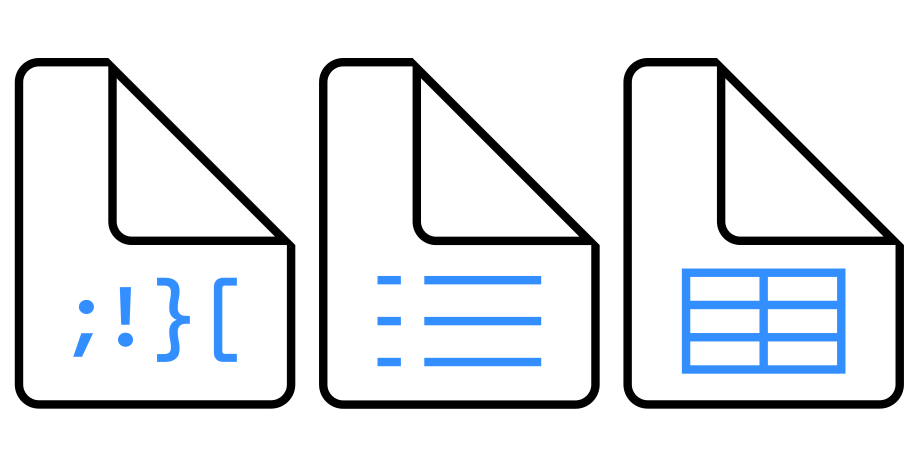
Another challenge is that a variety of data and inputs are required to configure a network. This includes IP addresses, passwords, physical addresses, cable designations and much more. These are stored in different locations and still have to be compiled manually today. To enable automation, interfaces to these data sources need to be built and integrated.
Why onway?
We take a structured and agile approach to automating your network. In a first step, we work with you to identify the “low-hanging fruits”, i.e. frequently occurring tasks that can be automated. We then crystallize which repetitive work processes lend themselves to automation. We use the appropriate tools for this and design the user interfaces.

We start the implementation with an initial important sub-goal, add further functions to it step by step and integrate the associated data sources. In this way, the extensive automation can be implemented in parallel with ongoing operations. Last but not least, we support you in managing the automation platform. We have a great deal of expertise in this area: one of the world's first DevNet experts works at onway.

Example of network automation using public transport vehicles:
Further interesting content on this topic:
 News
News- #automation
Ansible @ onway
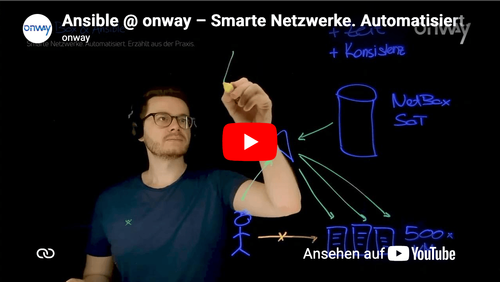
The second part of our blog series "Smart networks. Automated. From the field." is online! In the new video, our Systems Engineer Luca Gubler shows how we use Ansible to automate infrastructure, reduce config drift and respond faster to security topics.
More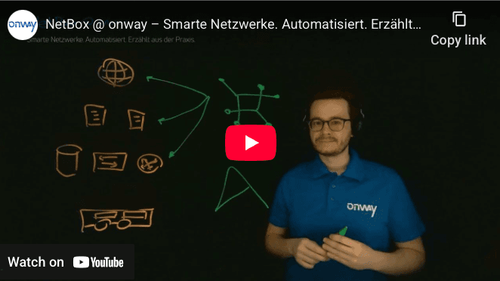 News
News- #video
NetBox @ onway
The first part of our blog series ‘Smart Networks. Automated. Real-world stories.’ is now online! In the first video, our Systems Engineer Luca Gubler shows how we use NetBox to systematically document and automate network infrastructures.
More News
News- #automation
- #enterprise
NetBox at onway: How We Automate Our Networks
How do you operate a network with more than 500 VMs, multiple data centres, and complex vehicle fleets efficiently? Our insights show how NetBox, as a central source of truth, enables configuration, monitoring, and automation – even for a small engineering team.
More
Do you need support in your network?
Our team will be happy to help you.
Tim Bütler
Account Manager Enterprise & Industry
Beat Stettler
Managing Director