
Jungfrau Railways
onway can look back on a success story spanning more than 20 years. Together with the Jungfraubahn Group, we recall the beginnings of our solution for the mobile world.
Jungfrau Railways

How we stumbled into modern infrastructure
The onway solution, now in use by countless transport companies, was born when a special customer approached us. High up in the snow-covered Bernese Alps, the Jungfrau Railway was to be equipped with a holistic vehicle architecture. A flexible communication platform at the ‘Top of Europe’ – a complex task with high demands. The onway solution had to be adapted to the mountainous terrain in order to be deployed successfully. Jungfrau Railways was the first to request standardized vehicle communication with a train-to-ground connection, setting the foundation for the software that today forms the cornerstone of all our solutions.
The vision of the Jungfrau Railway Group
At 3,454 metres above sea level lies the highest railway station in Europe, providing access to the Jungfrau-Aletsch UNESCO World Heritage Site. In 2019 alone, over one million guests visited the Jungfraujoch. Jungfraubahn Holding AG comprises twelve subsidiaries that operate excursion railways and winter sports facilities, among other things, making it the most important mountain railway company in Switzerland.
As part of the procurement of new rolling stock, the Jungfrau Railway Group sought the integrated communication platform described above in 2013. It was the first company to aim for an integral vehicle architecture – not merely individual solutions for separate components, but centralized control over various aspects such as advertising, passenger information, and connectivity via localization points.
The project posed particular challenges: equipping a moving vehicle is fundamentally more difficult than outfitting a stationary building. Furthermore, the Jungfrau Railway operates at extreme altitudes and passes through tunnels without signal coverage. The large number of visitors also increased the demand for a stable network accessible to external guests. For a company of this size, safety plays an equally crucial role.
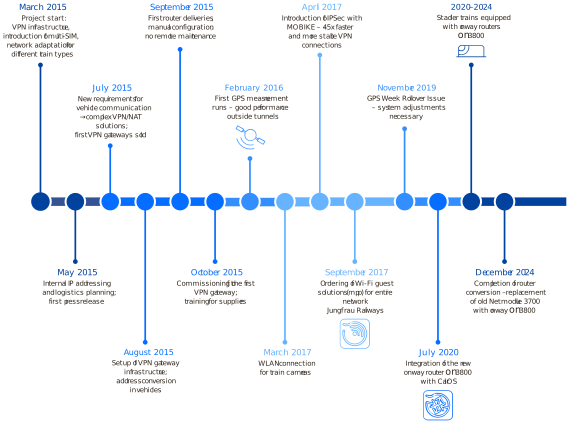
Technical milestones: onway & Jungfrau Railways project
onway solution convinces
Despite limited experience in public transport at the time, onway succeeded in winning the trust of the Jungfrau Railway Group. A key driver on the customer side was Urs Siegenthaler, Head of IT at Jungfrau Railways. In our interview, he later explained what convinced him of the onway solution and the internal skepticism he had to overcome.
onway outlined a model for an integral vehicle architecture in which individual applications no longer had to be maintained separately. Instead, a centralized management system controlled all functions via a single software platform. This innovative concept was tailored to the specific demands of the Jungfrau Railway. The onway solution addressed the issue of an unstable network – caused by the many curves and tunnels in the Bernese Alps – by implementing redundancy. This also enabled the rapid transmission of large data volumes for the infotainment system.
Visitors were to have access to Wi-Fi in stations, restaurants, and shops without complicated login procedures, while remaining clearly separated from internal systems. Encrypted IPSec connections ensured the vehicle architecture remained secure. For example, camera footage recorded at stations could be transmitted directly to train drivers without hesitation. The high-availability backend system and powerful communication via a dual-provider link further convinced the Jungfrau Railway Group. Ultimately, the onway director enabled management of all these applications with minimal administrative effort using a universal router.
From dream to reality
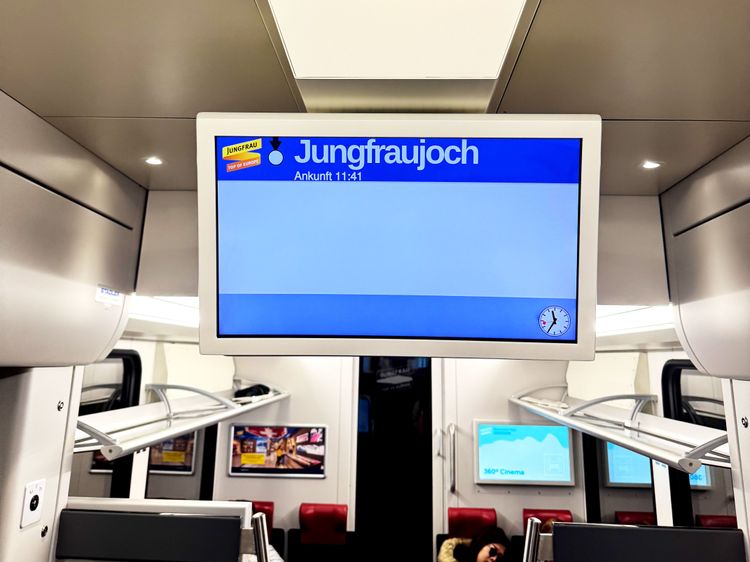
In 2015, the Jungfrau Railway began equipping its fleet with around 40 mobile routers. Today, that number has grown to 60, and the vehicle-to-ground connection is still provided by onway. For several years now, the company has also relied on our mpp Wi-Fi guest access solution across all public Wi-Fi locations in the region, providing customers with simple and stable internet access. Thanks to the onway director, the company can monitor the location and operational status of its trains at any time. Stability and secure connections are always guaranteed.
CarlOS is born
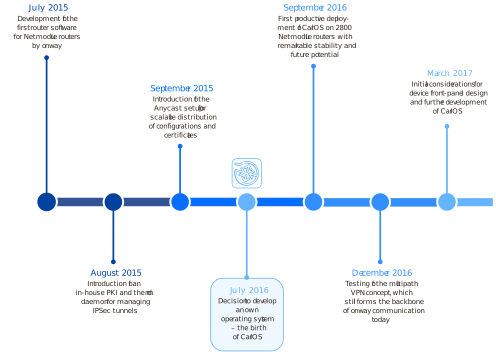
Today, all of our solutions are based on the original architecture first deployed for the Jungfrau Railway in 2015. At the time, onway did not yet have its own hardware and started out using a NetModule image with its first software daemon, the so-called MRD, running on top. This eventually evolved into CarlOS, our current operating system. It is now installed directly on our hardware and delivered as a fully operational complete package. The solution includes the on1800 model for industrial environments, the on2800 for buses, and the on3800 for rail transport.
Technical milestones: Development of CarlOS
Interview with Urs Siegenthaler
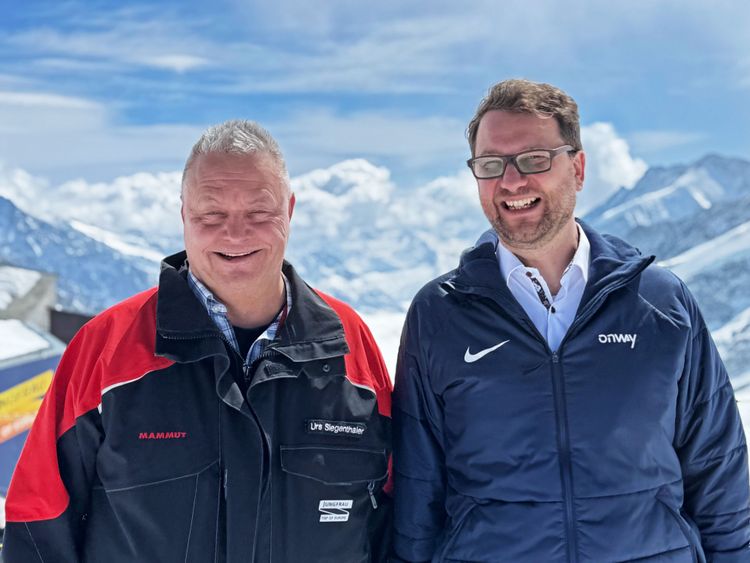
Urs Siegenthaler, Head of IT at the Jungfrau Railway Group, was involved in the project from the outset and gives us an insight into the challenges faced by Jungfrau Railways in an interview.
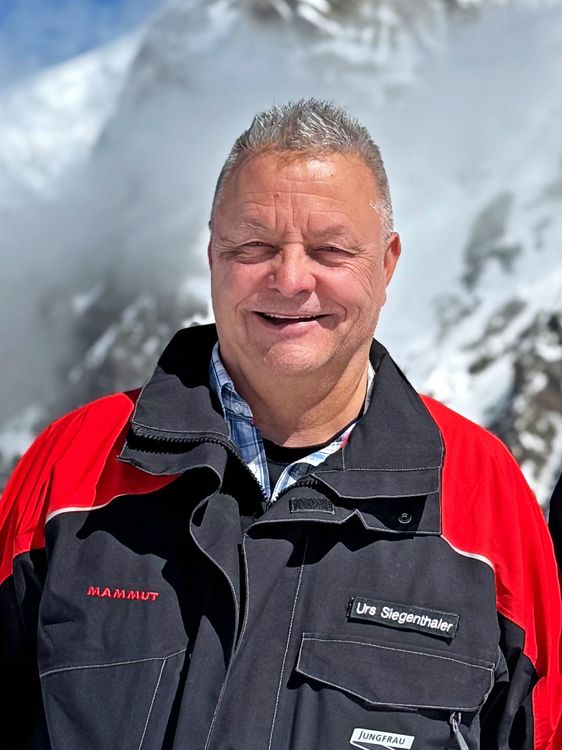
onway: When and where did the idea of standardising the vehicle architecture arise? What were the main objectives of the project?
Urs Siegenthaler: The reason for tackling the issue was the desire to provide our guests with better information on their train journey. We realised that we needed communication in the vehicles that we didn't have before. The first relevant topics came up: We would have to deal with mobile communications and WLAN as well as GPS for locating the vehicles. This is how the contact with WLAN-Partner (now onway) came about.
What motivated you to consider onway as a young software company with this large project?
We met by chance in Interlaken. We exchanged ideas there; what our challenges were at the time and how onway could contribute. After various contacts and discussions, we had the feeling that it could be a good fit. We are two companies that tick the same way. We understand each other and know what we want and need. As a result, onway was exactly the partner we had been looking for.
Did you have a clear vision for the product at the start of the project, or did the ideas change during the development process and in dialogue with onway?
At the very beginning, we took stock of the situation and set out the broad goals we wanted to achieve as well as the needs we had. Quite quickly, we drew up a four-page concept paper, which served as a template for further activities. During the realisation of the project, however, additional requirements were added, for example communication with cameras that we had installed on railway tracks. Fortunately, our design was flexible enough for us to incorporate this well.
What doubts did you have to overcome internally?
We didn’t actually have any doubts, we were just unsure about how to realise the project. At that time, we had no comparable project and there was no partner in the company who had realised something like this. In this sense, we were breaking new ground. It was therefore more a question of developing a feeling for finding a partner who was flexible and willing to take on the new challenges with us.
What were the technical challenges that the solution had to overcome? Were there any unexpected problems or obstacles during implementation? How were these overcome?
We tried to work largely with standard protocols and technologies. Onway also tried this at the time. There were challenges, especially in the vehicle area. For example, we had little space on the roofs to place the antennas. This led to a curious situation, as we suddenly had scorched antennas, so we had to find a new location on the train quite quickly. But otherwise, we were able to fulfil all the requirements of the project satisfactorily.
How did the employees react to the changes? Were there any training sessions or adjustments to working methods?
The Jungfrau Railways are used to operating in a constantly changing environment. However, this project was new to us. During the implementation, our employees were accompanied and supported by onway, especially when installing the components in the trains. Sketches were drawn up together and work processes explained so that our teams were guided step by step towards independence.
One of our goals was to create as centralised a platform as possible for managing all rail routers in our vehicles. For us, “managing” means that we know where the vehicles are located, know the software status of the devices and can import updates centrally.
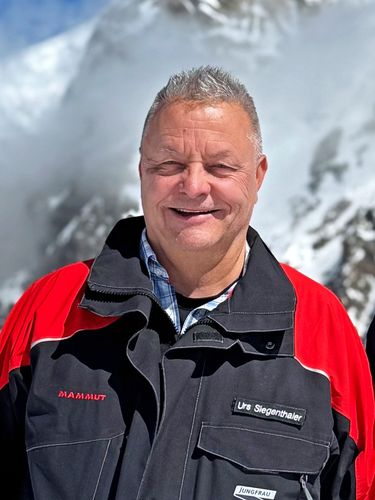
onway: How has the decision to standardise the vehicle architecture affected the efficiency and operation of Jungfrau Railways? Can you give specific examples?
Urs Siegenthaler: One of our goals was to create as centralised a platform as possible for managing all rail routers in our vehicles. For us, “managing” means that we know where the vehicles are located, know the software status of the devices and can import updates centrally. We made sure to implement such a solution right from the start. Looking back, we can say that without this standardisation, we would probably have a lot more work to do in day-to-day operations. Today, we can control everything centrally - that is a major advantage of this solution.
Why would you recommend the onway solution? In your opinion, what are the biggest advantages it has to offer?
I can recommend the onway solution because it can be managed centrally for us. The platform has a robust structure, the availability meets our requirements and the flexibility in the event of changes also fulfils our expectations.
How do you see the future of vehicle architecture and digital transformation in the transport industry? What trends are you observing?
The next development steps or requirements are topics that digitalisation brings with it. We would like to have dynamic and high-resolution content – video and sound – on the trains, better operation of the guest WLAN on the train. Of course, this places higher demands on the communication platform, particularly in terms of the bandwidth that we can provide and manage.
The smart solution for the mobile world began in the Bernese Oberland
The white paper on this exciting project is available for download here: